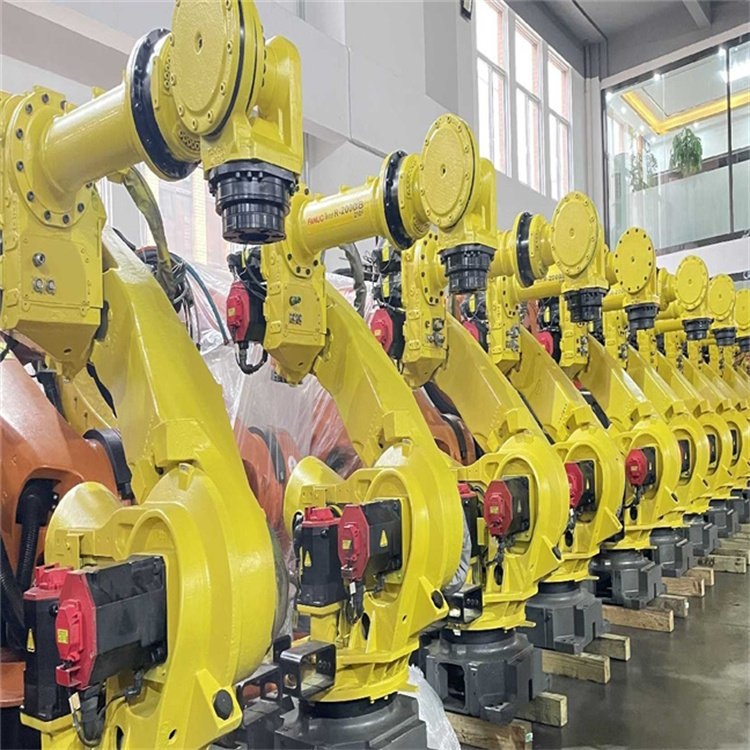
Robot joint bearings are often referred to as the "joints" of a robot; their precision, load capacity, and service life ultimately determine the robot's overall operational lifespan. Unlike standard bearings, robot joint bearings must maintain stability and balance throughout a series of complex movements.
Depending on the specific type of robot and its intended application, the core characteristics required of these bearings can be summarized in the following five points:
Ultra-High Precision and Rigidity
Robots are required to execute the same movements with precise repeatability; consequently, their bearings must possess exceptionally high levels of precision and rigidity.
- Micron-Level Positioning:** For high-end welding robots, practical applications demand a repetitive positioning accuracy of ±0.1 mm or even finer. To achieve this, the bearing's frictional torque and clearance (play) must be strictly controlled—typically requiring zero clearance.
- Resistance to Deformation:** Robot joint bearings must exhibit extremely high rigidity to prevent deformation during high-speed movements, thereby ensuring the accuracy of the robot's motion trajectory. Cross-roller bearings—characterized by their perpendicular arrangement of rollers—offer superior rigidity and resistance to overturning moments, making them a commonly chosen bearing type for robot joints.
High Load Capacity and Shock Resistance
In robotic applications, joint bearings are frequently required to withstand complex, multi-directional loads within a confined operating space.
- Compound Loading:** When a robot arm extends or handles heavy objects, its joint bearings must simultaneously withstand radial, axial, and overturning loads.
- Shock Resistance and Toughness:** For legged robots, the knee joints—particularly during running or landing after a jump—must endure instantaneous, high-magnitude shock loads that can exceed the robot's own body weight several times over. In such scenarios, bearing types featuring full-complement rollers (cage-less) or those equipped with bronze cages are typically selected.
Lightweight and Compact Design
Flexibility and energy efficiency are primary design objectives for modern robots, presenting significant challenges for the design of their joint bearings.
- Thin-Wall Design:** Given the extremely limited space available for bearing operation—despite the extensive functionality required—bearings typically employ a thin-wall, hollow-structure design to minimize weight while simultaneously providing internal clearance for the robot's wiring and cabling.
- Integrated Material and Structural Design:** This approach involves the use of specialized steel alloys combined with a maximally compact structural design—for instance, by integrating the bearing's inner and outer rings directly with their respective mounting flanges. Enhancing bearing rigidity while simultaneously reducing weight.
Environmental Adaptability and Long Service Life
Robots typically operate in relatively harsh environments and often work continuously for extended periods. This necessitates that the bearings within robot joints possess high reliability and a long service life.
- Sealing and Corrosion Resistance: In environments that are humid, dusty, or subject to chemical corrosion, bearings must exhibit superior sealing capabilities and corrosion resistance to prevent the ingress of contaminants that could lead to failure.
- The Trend Toward Maintenance-Free Operation: In specialized fields—such as surgical robotics and food processing—or simply to reduce maintenance costs, there is a growing adoption of self-lubricating joint bearings. These bearings achieve maintenance-free operation through embedded solid lubricating materials, thereby eliminating the risk of grease contamination.
- Resistance to Fretting Wear: Under static conditions or during periods of micro-vibration, the contact surfaces of bearings may experience fretting wear, resulting in a loss of precision. The selection of preloaded bearings, combined with the use of appropriate grease, can effectively mitigate this issue.
Low Friction and Low Noise
Smooth, quiet operation is another critical metric for evaluating robot performance.
- Energy Consumption Optimization: Low starting torque and low rotational friction torque directly reduce motor power consumption, thereby extending the robot's operational endurance.
- Smooth and Quiet Operation: Vibration and noise generated by friction not only compromise the robot's own operational stability but—in the case of service robots—also directly impact the user experience. The use of high-precision rolling elements and optimally designed cages is key to minimizing noise levels.
Summary: Positioning of Different Bearing Types
Based on the characteristics outlined above, different types of bearings are selected for various parts of a robot to meet specific core requirements:
Crossed roller bearings are frequently used in areas such as the robot's wrist, waist, and base—locations that are required to withstand complex combined loads.
Thin-section ball bearings are predominantly utilized in joints where space is at a premium, such as in the forearm sections of robotic arms or in finger joints.
Self-lubricating joint bearings are employed at the connection points of linkage mechanisms—for instance, in the ankle and elbow joints of legged robots.
Angular contact ball bearings are typically integrated into the internal mechanisms of RV reducers and harmonic reducers, as well as in other components that require high-speed rotational capabilities.